
“RC is where I discovered the urge to become an agent of positive change.”
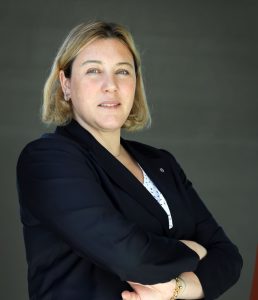
Gülser Corat has led many careers in her life, trailblazing in the field of gender equality. After graduating from RC and Boğaziçi University, she pursued graduate work at the College of Europe and Carleton University, later attending executive programs at Harvard Kennedy School and Harvard Business School. As the CEO of ECI Consulting, she led numerous development projects across the globe. From 2004 to 2020, she served as the Director of Gender Equality at UNESCO. In 2020, she was cited as one of the most influential technology leaders by Women in Tech and is the founder of the No Bias AI? Platform.
For her remarkable work, she was recently honored with the Galatasaray Award, recognized as a transformative force in society who espouses universal values for the greater good. RCQ had the opportunity to catch up with Corat shortly after this prestigious recognition.
What path led you to your role in UNESCO?
It was a highly circuitous trajectory. I started with the goal of becoming an academic, teaching and researching. However, while writing my Ph.D. dissertation on agribusiness in Cameroon, I found myself working as a development consultant across three continents for bilateral and multilateral institutions, eventually covering 65 countries in Africa, Latin America, and Asia.
My work focused on diverse issue areas, including agriculture, water management, capacity development, and governance, all infused with a gender equality and women’s empowerment perspective. This eclectic mixture of academia and field experience was the reason UNESCO hired me out of 2,000 applicants for the position of Director for Gender Equality.
Why do you think the intersection of ethics and technology is so critical today?
Technology has always been affected by its dual-use potential. Nobel’s dynamite was invented to make road-building easier; instead, it was primarily used to blow people up. Nuclear technology was supposed to help treat cancer with radiation, but it ended up fueling the infamous “I am become death” weapon of mass destruction.
Artificial Intelligence is another example. It was supposed to assist human beings in their various activities; instead, it is now poised to take over their jobs. The irony is that it is not very good at many of these tasks because it is being trained on data we produce, which reflects our biases and prejudices. Also, the code Claude produces looks good on paper until you realize that debugging takes much longer, and maintaining it is next to impossible. And if you ask ChatGPT the same question changing one or two words, you will get a completely different answer.
What we need is a clear understanding of what this technology entails, and regulate it to turn it into assistants for humans rather than aspiring masters hurtling towards AGI. However, looking back at the history of technology, I am not very optimistic. Moreover, the so-called Magnificent Seven tech companies are so powerful that it is unlikely that we will succeed in reining them in. So, we have a flawed and disruptive technology pushed by really powerful forces—the definition of a rock and a hard place.
How do you remember RC? How did it contribute to your life’s journey?
Recently, I had an epiphany: I realized that I was happiest at school, and while this observation encompasses my years at Boğaziçi, later in Bruges, and in Canada, the obvious starting point was RC. It was also the most formative institution, giving me the foundation for who I am today.
It was an idyllic setting. And, especially before the boys joined us in 1971 (I started in ACG in 1969), it felt like a finishing school for special kids. Not that we claimed to be special, the school made us feel that way. I was also lucky to be surrounded by a group of people who remained lifelong friends. It was gratifying to have people with whom you could share this extraordinary experience. RC brought to the surface my latent intellectual curiosity and my manifest desire to keep learning. Tellingly, I am in my fourth career at an age when most people have long retired. I credit RC with starting what has subsequently become, what I call, my “cultural fluency”, or the ability to understand people on their own terms. That’s where I learned to inhabit different languages and cultures instead of being lost in translation. Finally, it was also where I discovered the urge to become an agent of positive change, which became a defining trait.
An interesting part of your time at RC was that you received the Halide Edip Adıvar Award? How did that come about?
In those days, we had to choose between two streams in the last two years – Literature and Science, the first covering mostly social sciences and the latter STEM fields. While I was very good in physics and math, I opted for the former because I did not like chemistry and I was really interested in philosophy and literature. I was the top student in the Literature stream, and that is why I was given the award.
However, this is just the technical reason, as I believe the invisible hand of the universe was involved, as it has been all my life. You see, I was born in a house in Sultanahmet. When it was later burned down, they turned that space into a park. And, in the middle of it, they erected a statue of Halide Edip Adıvar.