Senem Akyollu Başyurt RC 88 Appointed CEO of Aydın Doğan Foundation

Her goal is to drive systemic change.

he Aydın Doğan Foundation invests in education, youth, gender equality, and social development to help build a more equitable society. As its newly appointed CEO, Senem Akyollu Başyurt RC 88 aims to strengthen this mission by positioning the Foundation as an ecosystem builder that brings together civil society, academia, business, and the public sector around shared solutions. For Başyurt, lasting impact requires moving beyond individual projects and pursuing systemic change through collaboration, patience, and evidence-based decision-making.

Over the course of her professional career, Başyurt became increasingly interested in applying her skills to social challenges. This led her to the NGO sector, where she found a meaningful intersection between strategy and purpose. “The best social impact work,” she says, “requires the discipline, strategic thinking, and accountability of the business world, combined with the mission-driven focus of civil society.”

For those interested in contributing to the social sector, Başyurt offers three pieces of advice: start before the perfect opportunity appears by volunteering, mentoring, or sharing professional expertise; approach communities with humility and curiosity, listening before proposing solutions; and commit for the long term, recognizing that meaningful social progress takes time.

As a boarding student, Başyurt experienced RC as a community that fostered independence, responsibility, empathy, and lifelong friendships. She sees a direct connection between those experiences and her later commitment to community-building and social impact.

Cem Kozlu RA 65 Makes His Fiction Debut

After authoring a number of non-fiction books, Cem Kozlu has finally written his first novel, Sandima Tableti  (The Sandima Tablet, Remzi Kitabevi). Kozlu says that he wanted to try his hand at fiction because he hoped to entertain his readers while also exploring some of his ideas about history:

“I write because writing requires reading and research, and those activities satisfy my curiosity. But above all, I write because I enjoy it. I enjoy playing with syllables, words, sentences, paragraphs, and sections. You plan them, move them around, cut things out, and then add others until you feel you have done your best.”

To avoid young readers in the RC community, Kozlu recommends his book  Liderin Takım Çantası  (The Toolkit of a Leader, Remzi Kitabevi), which aims to share practical approaches to self-management and leadership with young people, as well as Sandima Tableti, which he describes as entertaining summer reading.

Kozlu remembers his years at RC fondly:

“My writing career started at our newspaper,  The Bosphorus. I also acquired my first official title there as president of the Model Airplane Club, which we establish thanks to the encouraging and empowering approach of the late RA principal, Cornelius Bull. The friendships forged over eight memorable years have endured and flourished throughout a lifetime, becoming the most important and lasting legacy of my years at Robert Academy.”


Ayşe Kulin ACG 61 Writes a Literary Biography of Atatürk

Ayşe Kulin’s latest work,  Aylardan Kasım, Günlerden Perşembe  (The Month is November, the Day is Thursday, Everest Yayınları), takes a deeply personal approach to Türkiye’s founding leader. A piece of biographical fiction, the book attempts to shift the focus away from the well-known public persona of Mustafa Kemal Atatürk to explore his private, inner world. Kulin blends her empathetic prose with historical research to create a multi-faceted portrayal: “I combined the love of Atatürk in my heart with the knowledge I accumulated through reading so many sources about him. I wanted my readers to encounter the inner life of a man who has been a friend, lover, husband, divorcee, and ultimately, a sick and lonely man—not just Atatürk the Good Soldier and Founding Father.”

This nuanced perspective on leadership and humanity reflects Kulin’s own intellectual foundation. Addressing the RC graduating class in 2012, she had fondly recalled the core values she gained from her alma mater: “We blended the selfconfidence of the West with the inner discipline of the East, and we gained insight. A self-confidence that doesn’t overwhelm others, an awareness devoid of arrogance!” It is precisely this balanced insight and lack of arrogance that Kulin now brings to her literary portrait of Atatürk, seeing beyond the myth to honor the man.

RC 86: Forty Together

It had been a long wait, but RC ’86 finally came together to celebrate 40 years since graduation. Normally, we used to meet every five or ten years, but our planned 30th reunion in 2016 had to be cancelled following the events of July 15. Then came Covid, which kept us apart for even longer. So, when we finally met again in July 2026, it was not simply another reunion. It was our first big gathering in 15 years, making it especially meaningful, emotional — and, of course, very overdue!

We decided not to limit our 40th anniversary to one evening. Instead, throughout the year we created opportunities to meet, reconnect and enjoy being RC ’86 together. A dedicated committee of our classmates worked wholeheartedly throughout the year to bring these occasions to life. Earlier in the year, two of our classmates, both professional tour guides, took us on a fascinating historical tour of Istanbul, exploring some of the city’s remarkable treasures in the old town. We also gathered for a modern dance studio session hosted by one of our friends, enjoyed an evening of whisky tasting and even had a Sirtaki workshop before our reunion dinner. Apparently, 40 years later, we were still willing to learn new moves!

The reunion weekend itself began on July 16 with a boat trip along the Bosphorus, with families also joining us. It was a wonderful way to start the celebrations, with great food and beautiful views. For many of our friends who had travelled from the US and Europe, it was also a chance to rediscover the Bosphorus, which they had missed so much.

On July 18, 81 classmates gathered for our main reunion evening. We met in front of Gould Hall, walked together through our beautiful campus to the Deanery and enjoyed a cocktail hosted by Principal Whitman Shephard and his wife, Bengü. Seeing Mr. Shepard again was particularly special as he was our mathematics teacher in high school, making the evening feel like a wonderful reunion in more ways than one.

We returned to Gould Hall for our class photograph — in exactly the same spot where our graduation photograph had been taken 40 years earlier. Standing there together again was both joyful and nostalgic.

The dinner was held at Bizim Tepe, where our friend İbrahim Sözen talked about reflections on how Robert College shaped who we are, the enduring bonds we share and our common desire, since graduation, to contribute to society. One of the most emotional moments of the night was watching the video of our 1986 graduation ceremony, followed by a collage of photographs tracing our journey from Prep class through high school and then through the many gatherings that followed graduation. Live music by Sude Zeyrek RC 2020 followed, and at the end of her performance, our friends joined Sude on vocals and guitar, turning the evening into a joyful sing-along as we raised our voices together to some of RC ’86’s beloved songs, including “Together We Are Strong” and “Eski Dostlar.”

One more surprise followed. Those who had taken part in the Sirtaki workshop earlier on campus came onto the floor to show off what they had just learned. They performed a Sirtaki routine, proving that 40 years after graduation, we could still learn new steps — and perform them for our friends with great enthusiasm!

We then tested whether 40 years had improved or damaged our memories with a “Memory Trivia” covering our school years between 1979-1986. Our very own Nedim Saban moderated the trivia where there was plenty of laughter — and some highly questionable answers!

The evening continued on the dance floor until 2 a.m., with DJ Burak Süsoy RC 90 keeping us moving. Those who stayed overnight in the dormitories had the additional pleasure of returning, if only for one night, to a place that held so many memories of our younger years.

The following morning, families joined us again for brunch at Bizim Tepe before we finally said our goodbyes. We left with new memories, plenty of laughter and an even stronger appreciation of the friendships that have lasted all these years. We also carried home our special 40th-anniversary t-shirts and sweatshirts, featuring our “Forty Together” made from the names of all our classmates.

We had waited a long time for this reunion and it was definitely worth the wait. After 15 years apart, one thing was clear: we hope the next reunion comes much sooner!

Contributed by Gamze Ahıshalı Şulen RC 86

Artist Pelin Toğrul RC 03 Presented a Solo Exhibition: Doğa, Doku, Dokunuş (Nature, Texture, Touch)

Pelin Toğrul ‘s solo exhibition Doğa, Doku, Dokunuş (Nature, Texture, Touch) took place between February 28 to March 22, 2026 at ArtisArt Gallery.

Built through the interplay of acrylic and decorative plaster, the works foreground texture as both medium and message. Surfaces are not simply seen but imagined as felt—drawing attention to the depth beneath what first appears flat. In this sense, the exhibition becomes a study of perception: how we engage with art not only through sight, but through memory, sensation, and instinct.

At the heart of the show lies a dialogue between nature and human intervention. Contrasts such as rough and smooth, rigid and soft echo the rhythms found in the natural world, while the artist’s hand introduces intention, control, and interpretation. Through this tension, Toğrul constructs a visual language that bridges organic processes with crafted form.

Material exploration plays a central role. Alongside acrylic and plaster, textile elements and occasional natural components are incorporated into the works, reflecting a layered and, at times, sustainable approach to production. These choices reinforce the exhibition’s emphasis on depth—both physical and conceptual—where each layer contributes to a cumulative sensory experience.

Ultimately, Doğa, Doku, Dokunuş positions texture as a conduit between the external world and internal perception. It reflects on how humans absorb inspiration from nature and transform it through touch, creating new forms of expression that are at once grounded and interpretive.

Bridging Voices Across Cultures: Canan Özgür RC 06 in Córdoba

Canan Özgür, an award-winning opera singer and Associate Professor at Ankara Music and Fine Arts University, will take part in an Erasmus+ teaching mobility in Spain, bringing Turkish vocal repertoire to an international academic setting.

Hosted by Conservatorio Superior de Música Rafael Orozco, the program will take place between April 21–23, 2026, in Córdoba, as part of the Erasmus+ collaboration between the conservatory and Ankara Music and Fine Arts University. Within this framework, Özgür will work with voice students in the Andalusia region, focusing on interpretation and performance.

At the heart of this exchange is a repertoire that carries cultural depth and musical nuance. Introducing works by prominent Turkish composers such as Muammer Sun and Turgay Erdener, Özgür’s teaching aims to create a dialogue between traditions—allowing Spanish students to engage with the tonal language, phrasing, and emotional landscape of Turkish vocal music.

By carrying songs across borders, Özgür contributes to a growing space where music becomes a common language—one that transcends geography while remaining deeply rooted in its origins. Through this residency, Turkish compositions will find new voices in Córdoba, shaped by a different cultural context yet connected through the universality of sound and interpretation.

A Reflective Debut: Ters Ayna by RC Alumna Burcu Arkut Acun RC 04

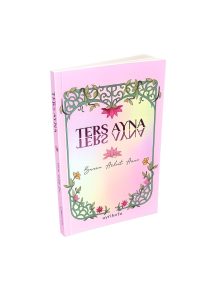
Burcu Arkut Acun debuted her first book, Ters Ayna (Reverse Mirror, Ayrıkotu Yayınları), a contemplative work that brings together her background in architecture and design with inner awareness and personal reflection. Ters Ayna emerges from an ongoing exploration of the relationship one builds with oneself—and how that relationship quietly shapes the way the world is experienced.

Rather than offering direct answers, the book unfolds as a series of reflections that invite the reader inward. It lingers on questions of visibility and perception—what it means to be seen versus to be visible—while gently probing ideas of waiting and deserving, and whether belonging is tied to a place or a state of being. Through the recurring metaphor of the mirror, each chapter creates space for the reader to encounter their own inner voice.

Written in a calm yet unfiltered tone, Ters Ayna encourages a slower pace: to pause, to notice, and to remember. It shifts the focus from fixing to recognizing, from becoming someone else to returning to oneself. In doing so, it offers a quiet but resonant invitation—suggesting that much of what is sought externally may already exist within.

Yasemin Sırali RC 97 Recognized For Her Sustainability Leadership by Fast Company

Fiba Group Sustainability Director Yasemin Sırali was recognized by Fast Company in March 2026 as one of the sustainability leaders creating a significant impact in Türkiye. This recognition follows an assessment of the Turkish sustainability landscape by a sizable jury composed of academics, global experts, and business leaders.

Sırali stated that the recognition brought her tremendous joy: “It reflects Fiba Group leadership’s commitment to continuous progress in our environmental and societal impact—and the exceptional team making it happen every day.”

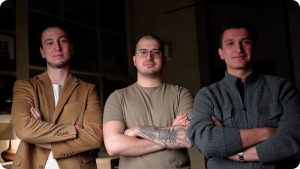
Öncel Özgül RC 21, Fikri Şan Köktaş RC 21, Emre Kaplaner RC 21 Co-Found Patientdesk

Sharing the same dorm room for five years, three friends discovered their entrepreneurial spirit at RC and founded a marketing agency together. This unique bond of living and working together created a solid foundation of trust. It was only natural that they translated this experience into an actual business, Patientdesk.

“The idea for Patientdesk was born out of a real-world friction we experienced. Our initial marketing agency evolved into a specialized dental marketing firm. We realized that while we were successfully generating leads for dental practices, the clinics weren’t calling them back, leading to zero conversions. To solve this, we built AI Receptionists to call our own leads. Upon expanding to the US market, we identified an even bigger bottleneck: insurance verification. This led us to pivot and develop our AI Insurance Coordinator product to automate this complex administrative burden.”
Soon their budding business caught the interest of investors, through the powers of networking and performance: “A close friend who was interning at E2VC was impressed by our team’s execution and introduced us to the fund’s General Partner, who decided to invest. Shortly after, we reached a major milestone: Y Combinator accepted us into the Winter 2026 batch. Being part of YC was a game-changer; it validated our vision on a global scale and made the rest of our fundraising round significantly smoother.”

The trio has advice for RC students with the entrepreneurial spirit: “Persistence is key. We spent an entire year stuck at $1k MRR (Monthly Recurring Revenue), which was a very difficult and demotivating period. However, we didn’t give up. The most important trait is the ability to “stick to it.” Success often lies just beyond the point where most people decide to quit.”

The trio was quite excited to learn about the RC Entrepreneurs Bond,  which is led by Hüseyin Tığlı RA 71 to foster a growing community of RC entrepreneurial minds committed to impact by giving back not only financially, but also through their time, network, creativity and passion:  “Given our journey from the RC dorms to Y Combinator and the US tech scene, we would love to join the community, share our experiences with AI, and contribute to the growth of fellow RC innovators.”

Global Thought Leader Saniye Gülser Canıvar – Corat RC 74 Awarded the Galatasaray Prize

“RC is where I discovered the urge to become an agent of positive change.”

Gülser Corat has led many careers in her life, trailblazing in the field of gender equality. After graduating from RC and Boğaziçi University, she pursued graduate work at the College of Europe and Carleton University, later attending executive programs at Harvard Kennedy School and Harvard Business School. As the CEO of ECI Consulting, she led numerous development projects across the globe. From 2004 to 2020, she served as the Director of Gender Equality at UNESCO. In 2020, she was cited as one of the most influential technology leaders by Women in Tech and is the founder of the No Bias AI?  Platform.

For her remarkable work, she was recently honored with the Galatasaray Award, recognized as a transformative force in society who espouses universal values for the greater good. RCQ had the opportunity to catch up with Corat shortly after this prestigious recognition.

What path led you to your role in UNESCO?

It was a highly circuitous trajectory. I started with the goal of becoming an academic, teaching and researching. However, while writing my Ph.D. dissertation on agribusiness in Cameroon, I found myself working as a development consultant across three continents for bilateral and multilateral institutions, eventually covering 65 countries in Africa, Latin America, and Asia.

My work focused on diverse issue areas, including agriculture, water management, capacity development, and governance, all infused with a gender equality and women’s empowerment perspective. This eclectic mixture of academia and field experience was the reason UNESCO hired me out of 2,000 applicants for the position of Director for Gender Equality.

Why do you think the intersection of ethics and technology is so critical today?

Technology has always been affected by its dual-use potential. Nobel’s dynamite was invented to make road-building easier; instead, it was primarily used to blow people up. Nuclear technology was supposed to help treat cancer with radiation, but it ended up fueling the infamous “I am become death” weapon of mass destruction.

Artificial Intelligence is another example. It was supposed to assist human beings in their various activities; instead, it is now poised to take over their jobs. The irony is that it is not very good at many of these tasks because it is being trained on data we produce, which reflects our biases and prejudices. Also, the code Claude produces looks good on paper until you realize that debugging takes much longer, and maintaining it is next to impossible. And if you ask ChatGPT the same question changing one or two words, you will get a completely different answer.

What we need is a clear understanding of what this technology entails, and regulate it to turn it into assistants for humans rather than aspiring masters hurtling towards AGI. However, looking back at the history of technology, I am not very optimistic. Moreover, the so-called Magnificent Seven tech companies are so powerful that it is unlikely that we will succeed in reining them in. So, we have a flawed and disruptive technology pushed by really powerful forces—the definition of a rock and a hard place.

How do you remember RC? How did it contribute to your life’s journey?

Recently, I had an epiphany: I realized that I was happiest at school, and while this observation encompasses my years at Boğaziçi, later in Bruges, and in Canada, the obvious starting point was RC. It was also the most formative institution, giving me the foundation for who I am today.

It was an idyllic setting. And, especially before the boys joined us in 1971 (I started in ACG in 1969), it felt like a finishing school for special kids. Not that we claimed to be special, the school made us feel that way. I was also lucky to be surrounded by a group of people who remained lifelong friends. It was gratifying to have people with whom you could share this extraordinary experience. RC brought to the surface my latent intellectual curiosity and my manifest desire to keep learning. Tellingly, I am in my fourth career at an age when most people have long retired. I credit RC with starting what has subsequently become, what I call, my “cultural fluency”, or the ability to understand people on their own terms. That’s where I learned to inhabit different languages and cultures instead of being lost in translation. Finally, it was also where I discovered the urge to become an agent of positive change, which became a defining trait.

An interesting part of your time at RC was that you received the Halide Edip Adıvar Award? How did that come about?

In those days, we had to choose between two streams in the last two years – Literature and Science, the first covering mostly social sciences and the latter STEM fields. While I was very good in physics and math, I opted for the former because I did not like chemistry and I was really interested in philosophy and literature. I was the top student in the Literature stream, and that is why I was given the award.

However, this is just the technical reason, as I believe the invisible hand of the universe was involved, as it has been all my life. You see, I was born in a house in Sultanahmet. When it was later burned down, they turned that space into a park. And, in the middle of it, they erected a statue of Halide Edip Adıvar.