
The entrepreneurial drive within the Robert College community has deep roots. Long before alumni were launching Türkiye’s leading modern enterprises, that inventive spirit was evident on campus, where the school operated its own selfsustaining farm and sold surplus produce to neighboring areas. Today, RC’s legacy of innovation continues to shape the nation’s business landscape through younger generations, who are leveraging emerging technologies and artificial intelligence.
The Rise of the Teen Entrepreneur
Around the globe, youth entrepreneurship has undergone a profound paradigm shift—evolving from a career track for the businessminded into a vital survival skill for a highly volatile, AI-driven world. The traditional path of waiting until adulthood to start a business has shifted. Today, “teen entrepreneurship”—defined as young people aged 13 to 19 launching, managing, and scaling business ventures—is a thriving economic movement.
Several factors have made this shift prevalent today.
· Democratic Access to Technology:
The barrier to entry has plummeted. With a smartphone and an internet connection, a teenager has access to virtually the same global infrastructure as a Fortune 500 company.
· No-Code and AI Tools:
Building a website or an app used to require years of specialized software engineering. Now, intuitive no-code platforms and artificial intelligence design tools allow rapid prototyping in hours rather than months.
· The Power of Social Media:
Platforms like TikTok, Instagram, and YouTube serve as free, built-in marketing machines. Gen Z individuals are digital natives who instinctively understand algorithm-driven growth and peer-to-peer marketing, allowing them to build hyper-engaged audiences organically.
Ultimately, this trend means a fundamental rewiring of the future workforce. These young founders are building digital literacy, financial independence, and a high risk tolerance early in life. By decoupling professional success from traditional corporate timelines and university degrees, teen entrepreneurs are proving that agility, communitybuilding, and technological fluency matter far more in the modern economy than age or experience.
Education needs to respond to these changes. Across OECD countries, embedding entrepreneurship education at the high school level is widely viewed as critical for long-term economic growth, as it has the power to overcome socio-economic barriers and fight unemployment, particularly among young people. Indeed, the Turkish Ministry of Education (MEB) created an elective to introduce entrepreneurship to high school students in 2025.
Parallel to these dynamics, RC student interest in entrepreneurship has risen markedly over the years. Students increasingly recognize the need to develop entrepreneurial skills to accomplish the kind of changes they want to make in the world and RC proactively supports them along the way.
However, for an institution like Robert College, integrating entrepreneurship into education is less about teaching students how to launch startups and more about fostering a resilient, problem-solving mindset. By embedding these concepts into campus life—through clubs, events and classroom innovation—RC provides a vital incubator where academic excellence meets real-world execution. It empowers young minds to look at modern ambiguities not with anxiety, but as opportunities to build, pivot, and lead.
Students entering RC now have opportunities to develop entrepreneurial skills inside the classroom, in their co-curricular activities, and (coming soon!) in the RC’s first innovation center. Opening in the renewed Feyyaz Berker Hall, the Innovation Center will provide a collaborative space for creativity, innovation, and entrepreneurial thinking. Designed with input from students and faculty, it is made possible through the generosity of Hüseyin Tığlı RA 71.
From Class to Club: How RC Students Cultivate the Entrepreneurial Spirit
“The work happening at RC is testament to how the school embraces innovation.”
JT Rehill, the Head of Social Innovation & Entrepreneurship at RC, explains exactly how this entrepreneurial mindset takes root and thrives within the school.
Inside the classroom, is where the most significant progress has been made in the past couple of years.
Across OECD nations, introducing entrepreneurship education in high schools is widely considered vital for sustained economic growth, offering a powerful way to break down socioeconomic barriers and combat youth unemployment. Reflecting this trend, the Turkish Ministry of National Education (MEB) introduced a new elective course last year to teach entrepreneurship to high school students, and so far more than 200 of our own students have completed it. Next year, we are introducing a brand new Advanced Placement (AP) course from the College Board: AP Business with Personal Finance. This course will impart core university-level business concepts and require that all enrolled students create a business plan for their own enterprise over the course of the year.
RC currently has more than 140 clubs and initiatives, some of them providing the kinds of experiences students will use to forge their own innovative paths in the future. These include newer clubs working on AI, quantum computing, and biodesign; and long-established clubs like Makers, Robotics, the Business Society, and Destination Imagination (DI). Three clubs, however, stand out as uniquely focused on fostering entrepreneurial skills and abilities:the Startup Factory, Junior Achievers (JARC), and the Social Entrepreneurship Club.
The Startup Factory initiative has completed its second year, with three student enterprises securing mentorships from venture capitalists in support of their newly minted ventures. The club attracted more than 100 students to its ranks at the start of the year and we expect this momentum to continue. In true incubator style, JARC recruits a limited number of students each year with half devoting themselves to idea generation and product development, while the other half learn essential business skills through planning, organizing, marketing, and managing a series of annual events.
The Social Entrepreneurship Club dates back more than a decade and has supported students in creating their own social enterprises, from mushroom farming to educational publishing celebrating women entrepreneurs. One notable success has been in supporting local producers of social and environmentally responsible products in a weekly popup store in the Commons. The proceeds from the Sustainable Goods Marketplace go directly to supporting student projects. Next year, the SEC students will be teaching robotics to their peers in Kenya and developing solutions to other social challenges in Peru and elsewhere in the world.
As the Head of Social Innovation & Entrepreneurship at RC, I’m excited to be part of the amazing things our students are doing and helping them prepare for the world they will graduate into. It’s still rare for a high school anywhere in the world to invest so much in entrepreneurship education, and the work happening at RC is testament to how this school embraces innovation and works to support students in ways that can help them make a positive difference in the world.”
The Startup Factory- Where Ideas Find TheirWings
The Startup Factory is a club that was founded by Mert Kaan Atan RC 25 and Emir Çelet RC 25. It meets twice monthly. The goal of the club is to offer RC students the opportunity to apply their knowledge to important problems through creative means. Throughout the year, the club organizes workshops, speaker events, and panel discussions that connect students with founders, investors, and other leaders from the Turkish startup ecosystem. These events allow students to learn from experienced entrepreneurs, receive feedback on their ideas, and gain exposure to the startup world.
RCQ asked Emre Açar RC 27, a member of the club, about how entrepreneurship is part of students’ conversations and future plans: “RC students know that founding profitable startups can be one of the most sustainable ways to address major challenges like climate change. By combining their passion with technology, they want to lead the way in solving the problems they care about most. Current advancements in technology make it possible for almost anyone, even with limited resources, Student speakers at Social Entrepreneurship Festival Social Entrepreneurship Club students during SE Festival workshop cover story 43 to embark on this journey more easily. This presents a great opportunity for those who want to lead change. RC students have started to believe more in their own ideas and in themselves, which has led to growing interest among them.”
The Flagship event of the club is Bobcat’s Den, where students pitch their ventures to a panel of judges.
First of Its Kind: RC Bobcat’s Den
Robert College has taken student entrepreneurship to the next level with RC Bobcat’s Den, a pioneering initiative where alumni invest real money or offer mentorship to student startups. Formed by Class of 2025 members Mert Kaan Atan and Emir Çelet, this project represents a historic first for high school education in Türkiye.
The program operates in two stages: a pre-elimination phase and a final pitch competition. During the finals, student-led ventures compete for real financial backing from a panel of experienced investors and experienced entrepreneurs from RC community. More than just a contest, Bobcat’s Den fosters intergenerational community bonds by offering students invaluable professional mentorship from the RC community. The initiative successfully debuted on April 16, 2025, where six student teams pitched their ideas to alumni investors Selin Dilmener Göral RC 03, Burcu Göbülük RC 00, Fırat İşbecer RC 98, and Ersan Öztürk RC 94. Jury member Selin Dilmener Göral was so impressed with the presentations that she said she felt more hopeful than ever about the future.
The First Winner of Bobcat’s Den Emre Ersin RC 26 Created a Receptionist
“Bobcat’s Den creates a powerful incentive to move from thinking to doing.”
As the owner of the winning idea Emre Ersin RC 26 received a grant at the inaugural Bobcat’s Den for Sonexa, an AI-powered voice receptionist for dental clinics.
“The idea came from observing how much time front-desk staff spend handling repetitive tasks such as scheduling appointments, sending reminders, and answering common patient questions. Sonexa automates these interactions through conversational voice AI that can manage calls from start to finish.
Winning at Bobcat’s Den was one of the first forms of external validation for the project. More importantly, it gave me the confidence and motivation to move beyond the idea stage and begin working directly with dental clinics to test and refine the solution.
RC has an incredible pool of talented and ambitious students. However, many students with great ideas never take the first step toward turning them into reality. Bobcat’s Den creates a powerful incentive to move from thinking to doing.
The competition encourages students to engage in the challenging but essential aspects of entrepreneurship: speaking with potential customers, building something tangible, testing assumptions, and presenting their ideas under pressure. Even for students who do not ultimately pursue their projects, the experience teaches valuable skills in problem-solving, communication, and execution.
After graduation, I will be attending Imperial College London to study Medicine. I plan to continue exploring entrepreneurship and innovation. My long-term goal is to found a biotechnology startup. Through my experiences with Startup Factory and Sonexa, I discovered that I am deeply interested in building solutions that combine scientific advancement with entrepreneurship.”
Hüseyin Tığlı RA 71 Instigates the Creation of an RC Entrepreneurship Community
While RC alumni have supported each other’s business ventures for decades, Hüseyin Tığlı RA 71 is leading the way in transforming this organic spirit into a structured, sustainable network. His brainchild, the RC Community Entrepreneurs Bond (RCCEB), devises a unique way for founders to give back to their alma mater.
Tığlı’s inspiration struck after reconnecting with the campus following what he calls a long period of “being off the grid.” Deeply impressed by the curiosity and warmth of the current student body, he began reflecting on his own enduring friendships from his days at Robert Academy fifty years ago. Visualizing the massive potential of the global RC network, he wondered if the community was making the ultimate impact it could.
Shortly thereafter, Tığlı encountered a program at Harvard Business School called “The Entrepreneurs Promise,” which encouraged alumni to pledge a portion of their business exit proceeds to the school. “I thought the idea was interesting but limited,” Tığlı recalls. “Could there be a more comprehensive way for the RC community to support innovation and entrepreneurship in a vibrant ecosystem, while also supporting our school? That question was the origin of The Bond—a community of RC entrepreneurs, investors, executives, and friends, all passionate about further strengthening RC for years to come.”
The RC Community Entrepreneurs Bond is still in its formation stages, but already received significant interest, with many alumni contributing ideas and volunteering their time to put solid structures in place. It seems indeed there was genuine longing for tighter, meaningful and impactful connections.
Though still in its formative stages, the RCCEB has already tapped into a genuine longing for tighter, more impactful connections, drawing significant volunteer interest from alumni. True to its startup nature, Tığlı prefers to keep the metrics simple for now: “If we could help one more startup to achieve success and if that could fund one more scholarship, I will be happy that our efforts have been worthwhile. Personally, there was no way for me to attend Robert College or pursue graduate studies without the full scholarship I received, so it is my absolute pleasure to give back.”
Like an agile startup, the RCCEB plans to experiment, iterate, and improve by embracing the “fail fast” methodology.: “Jump in, try things, shorten trial cycles, fail, fail, then improve…”. Tığlı underlines that innovation is already happening even in the formative stages of RCCEB: “One of our members, Eray Erdogan RC 09, is inspired by the idea of “serendipity engineering”- “—the practice of intentionally structuring onboarding processes to increase the probability of meaningful, impactful connections.
I relate to this concept of serendipity engineering experientially. I met many wonderful members of the RC community during the formative stages of this initiative, mostly by chance. Would it not be wonderful, if we could achieve more impactful connections, intentionally?”
RCCEB Connectors Group: Engineering Serendipity
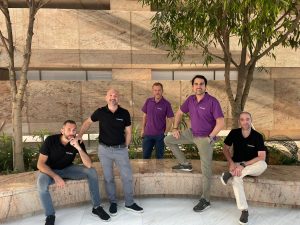
The RCCEB created an important subset, the Connectors Group. In a nutshell, the Connectors Group exists to build and maintain the platform(s) and processes for efficient communication among RCCEB community members. This mission involves both a solid communications infrastructure for information and matching as well as the personal connections that make those matches impactful. RCQ asked key members of the group about their involvement and work to date:
What has your entrepreneurship journey been like? Why did you join the RCCEB Connectors Group?
Eray Erdoğan RC 11 is the founder of Reflect Studio, a B-Corp certified merchandise and lifestyle brand:
“I co-founded Reflect Studio (reflectstudio.com) with two other RC graduates, and I now serve on the board, while I plan the next chapter of my career. My interest in entrepreneurship goes back to university, where I founded Koc University’s entrepreneurship club. I have been involved in a number of ventures since then, including in the education space. The longest-running of these is Reflect Studio. Now that Reflect has matured, I am at an inflection point. I am planning my next venture, which will center on enabling other entrepreneurs. Therefore, joining the Connectors Group came at exactly the right moment.
What excites me most is engineering cover story 45 serendipity. Every introduction we facilitate has the potential to change a trajectory. A chance meeting becomes a mentorship. A casual introduction becomes a funding round. My role is to help build the matching layer that turns the RC network into something more than a directory: a system where the right people find each other at the right time, by design rather than by luck.”
Kaan Hotan RC 23 currently angel invests into early stage startups and supports exceptional founders from day zero. He is also in the process of setting up a VC fund, to continue his focus on early-stage investing:
“I have been on a scholarship throughout my time at Robert College, and I have always wanted to find a meaningful way to give back. The Connectors Group is the best path I have found to do that. As an investor, the group I most enjoy backing is RC graduates and friends of RC, so this role aligns directly with where I already focus my attention.”
Sinan Gölhan, RC Friend, son of Oya İnal RC 85, is the founder and CEO of GelTech Labs, a robotics and AI driven, self-driving laboratory that accelerates R&D and quality-control testing for soft biomaterials:
“I grew up observing close family members fighting cancer. This observation motivated me to pursue research in advanced biomaterials for drug delivery. As a scientist I felt like a robot repeating the same protocols day in, day out. I dropped out and started a lab robotics company to speed up discovery. Robert College runs three generations deep in my family, so when a trusted contact introduced me to the RCCEB community, it felt like a natural fit.”
Yasemin Gökçe RC 07 is building technical marketing company, komutai.com in Istanbul, after a fifteen-year career in software engineering and data science, most recently as a quantitative data researcher at Citadel in the United States:
“I am at an early stage of my own entrepreneurship journey, and joining the Connectors Group came at a fortunate moment. With recent advances in AI, I realized that the data processing and context-rich decision making capabilities that I helped build at Citadel can now be made available to many more companies. This led me to start Komutai, where I help companies adapt their marketing to target their newest and largest “demographic”: AI Agents.
Having returned to Istanbul from the United States, I was looking to reconnect with the Robert College community, and this opportunity aligned with that wish. Contributing my technical skills and working with the other Connectors has been very rewarding.”
What is the Serendipity File? What sort of stories have you gathered so far?
“The Serendipity File is built as new members join the Bond. Each entry comes out of a roughly half-hour conversation between the prospective member and the Connectors Group. The conversation covers three areas: the person’s background, what they are seeking, and what they feel they can contribute. We capture that information in a structured brief with consistent fields for sector, geography, what someone is looking for, what they can offer, and the counterpart types and timing that matter, so that when a future need arises we can search the library directly.
The briefs already cover a wide range of profiles. They include late-stage PhD candidates preparing to spin biotech work out of US research labs, and a semi-retired industrialist running hydrogen and composites R&D, who is open to hosting young engineers in his factory. There is a recently retired federal-agency scientist now coaching SBIR (Small Business Innovation Research) proposals, serial founders between ventures, and first-time solo founders looking for cofounders or their first enterprise customers. We have senior corporate operators exploring a founder path, boutique business owners looking for steadier trusted demand, wealth and familyoffice partners developing productside theses, retired senior operators offering board and advisory time, and deep-tech consultants who still want to mentor and teach. We also have students looking for their first meaningful technical roles, and content-side professionals exploring personal media projects alongside their corporate work.
Roles cluster around three broad arcs: members in active build mode, members in selective-contribution mode after a long career, and members early in their trajectory looking for high-quality exposure.
This level of granularity is difficult to surface from a CV or a LinkedIn page. The private member website has not yet launched, and the Serendipity File is being built as the backbone for structured matching once it does. Even working only from our private network and these conversations so far, we have already been able to connect members and seed collaborations. With higher-resolution capture in place, and the supporting infrastructure currently being set up, we expect that to grow substantially.”
How did Robert College contribute to your individual stories? Eray Erdoğan RC 11: The friendships I built at Robert College continued well past graduation, and I co-founded my company with my RC friends. As I plan my next steps, I am again consulting with many RC graduates. I would like to pay it forward by drawing on the entrepreneurship community in Türkiye, which I know well, to support RC founders.
Kaan Hotan: Throughout my early career, Robert College graduates have been the people who made things possible. They mentored me, and taught me entrepreneurship, as this is an apprenticeship business. My life has always revolved around Robert College both personally and professionally.
Sinan Gölhan: My great-grandfather graduated in 1921 and my mother graduated in 1985. RCCEB has been my way of connecting with the Robert College community and continuing my family legacy at RC. GelTech Labs is currently fundraising, and I have received meaningful support from the RC community in that process.
Yasemin Gökçe: Robert College was the most pivotal institution in my life. Despite almost twenty years having passed since graduation, I still vividly remember the labs, the books, and the feeling that I had “found my tribe.” Unfortunately, during my years in Chicago I drifted away, but I’ve been very fortunate to be received back with open arms when I took steps to reconnect. RCCEB has given me a way to plug into the larger RC community as well, and I am so pleased to be interacting with the members and contributing to our collective.
From Brick-and-Mortar to AI: The Future is Exciting
RC boasts many alumni who have contributed to the Turkish economy through foundational businesses. For instance, after graduating from Robert College in 1932, Nejat Eczacıbaşı revolutionized Türkiye’s healthcare and industrial sectors. Classmates at Robert College who later pursued engineering in the US, Feyyaz Berker RC ENG 46 ve Nihat Gökyiğit RC ENG 46, paired up to found an engineering consulting firm in 1956 that quickly transformed into Tekfen Construction, responsible for massive brick-and-mortar landmarks including pipelines, highways, and oil refineries. İbrahim Bodur RC 50 founded Türkiye’s first ceramic tile factory in Çanakkale in 1957. He is widely recognized as one of the pioneers of regional industrialization in Türkiye. Hüsnü Özyeğin RA 63 had a significant impact on Turkish banking through Finansbank and later built an immense footprint in retail and real estate through Fiba Group. İbrahim Betil RA 64 founded Bankekspres and later launched the NGO Toplum Gönüllüleri Vakfı (Community Volunteers Foundation).
With space, RC’s entrepreneurial energy compounds with each passing year, as the school supports students with key knowledge, skills, experiential platforms, and curious community members who are potential investors or collaborators. Thanks to the advent of AI, many stories coming out of RC now have an AI twist. For example, Kaan Karakeben RC 08 founded Cruvo, an AI-powered executive search sourcing service based in London. After more than five years leading the machine learning team at Beamery, a major HR-tech unicorn, he left in 2025 to build an agentic AI workflow that produces curated candidate shortlists for executive search firms. Orkun Duman RC 15 cofounded Cytara, an AI-native software company building tools for GxP review and other regulated pharmaceutical workflow bottlenecks. He studied Computer Science at UC Berkeley and spent six years at Google, working across Fuchsia, Search, Discover, and generative AI products before moving into company building.
It is impossible to encapsulate every milestone in a history this rich. But the true power of Robert College’s entrepreneurial tapestry lies not just in where it has been, but where it is going. Armed with a legacy of visionary builders and social changemakers, the RC community faces the future with bold curiosity, knowing that the greatest chapters are still yet to be written.