Öner Akgerman RA 61, Trustee Emeritus of Robert College

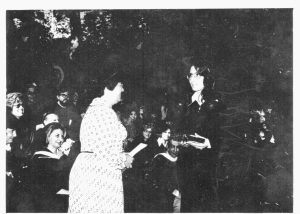
Öner Akgerman RA 61, TE was a valued member of the Robert College community and a dedicated supporter of the school over many years. He completed his middle school, high school, and college education at Robert College, graduating from the department of Business Administration and Economics in 1965. Throughout his professional life, he played an important role in the development of Türkiye’s industrial sector, holding senior leadership positions and contributing to a range of initiatives across industry and business.


He served on the RC Board of Trustees beginning in 1987 and became Trustee Emeritus in 2012. During his years of service, Mr. Akgerman remained closely connected to Robert College and offered thoughtful guidance and steadfast support to the school.
Mr. Akgerman’s ties with Robert College also extended through his family, particularly through his son Bülent Akgerman RC 88.


On behalf of his classmates, Aydın Bilgin RC 61 contributed the following tribute to a life well-lived.


“The passing of our beloved classmate for 73 years, Öner, has deeply shaken us all. Known for his gentlemanly demeanor, reliability, and constant support, both materially and spiritually, Öner left us due to an illness. To briefly summarize his life, after graduating from RC Faculty of Administrative Sciences in 1965, he began his career at Çimentaş in İzmir, taking on senior roles and leading the establishment of companies in ready-mixed concrete, cement, construction, insurance, and tourism. Later, together with his sons Bülent Akgerman RC 88 and Levent Akgerman, he founded the AKG Insulation Company, producing ready-mixed and aerated concrete, natural stone, as well as operating fish farms and the food sector. Öner served as a member of the Aegean Region Chamber of Industry Assembly, held the positions of Vice President and Chairman of the Executive Committee of the Turkish Cement Manufacturers Association, and was involved in the management of the Çimentaş Education and Health Foundation. In addition to his industrial activities, he made significant contributions to education and served on the RC Board of Trustees for 25 years.


In the second year of middle school, when our literature teacher Ahmet Aksoy asked the class what “reliance on God” meant, Öner was the only one who knew the answer: “After doing everything you can, leaving the things you can’t do to God.” Years later, Öner, who always strived to do his best, became not only a prominent figure in Izmir’s industry but also a respected name in Turkey’s business world.

Öncel Özgül RC 21, Fikri Şan Köktaş RC 21, Emre Kaplaner RC 21 Co-Found Patientdesk

Sharing the same dorm room for five years, three friends discovered their entrepreneurial spirit at RC and founded a marketing agency together. This unique bond of living and working together created a solid foundation of trust. It was only natural that they translated this experience into an actual business, Patientdesk.

“The idea for Patientdesk was born out of a real-world friction we experienced. Our initial marketing agency evolved into a specialized dental marketing firm. We realized that while we were successfully generating leads for dental practices, the clinics weren’t calling them back, leading to zero conversions. To solve this, we built AI Receptionists to call our own leads. Upon expanding to the US market, we identified an even bigger bottleneck: insurance verification. This led us to pivot and develop our AI Insurance Coordinator product to automate this complex administrative burden.”

Soon their budding business caught the interest of investors, through the powers of networking and performance: “A close friend who was interning at E2VC was impressed by our team’s execution and introduced us to the fund’s General Partner, who decided to invest. Shortly after, we reached a major milestone: Y Combinator accepted us into the Winter 2026 batch. Being part of YC was a game-changer; it validated our vision on a global scale and made the rest of our fundraising round significantly smoother.”

The trio has advice for RC students with the entrepreneurial spirit: “Persistence is key. We spent an entire year stuck at $1k MRR (Monthly Recurring Revenue), which was a very difficult and demotivating period. However, we didn’t give up. The most important trait is the ability to “stick to it.” Success often lies just beyond the point where most people decide to quit.”

The trio was quite excited to learn about the RC Entrepreneurs Bond,  which is led by Hüseyin Tığlı RA 71 to foster a growing community of RC entrepreneurial minds committed to impact by giving back not only financially, but also through their time, network, creativity and passion:  “Given our journey from the RC dorms to Y Combinator and the US tech scene, we would love to join the community, share our experiences with AI, and contribute to the growth of fellow RC innovators.”

Ahmet Uysal RC 90

Don’t miss this conversation with Ahmet Uysal RC 90 as he shares how sport became a lifelong vehicle for giving back — reflecting on discipline, community, and the impact of staying connected through the values shaped along the way.

Global Thought Leader Saniye Gülser Canıvar – Corat RC 74 Awarded the Galatasaray Prize

“RC is where I discovered the urge to become an agent of positive change.”

Gülser Corat has led many careers in her life, trailblazing in the field of gender equality. After graduating from RC and Boğaziçi University, she pursued graduate work at the College of Europe and Carleton University, later attending executive programs at Harvard Kennedy School and Harvard Business School. As the CEO of ECI Consulting, she led numerous development projects across the globe. From 2004 to 2020, she served as the Director of Gender Equality at UNESCO. In 2020, she was cited as one of the most influential technology leaders by Women in Tech and is the founder of the No Bias AI?  Platform.

For her remarkable work, she was recently honored with the Galatasaray Award, recognized as a transformative force in society who espouses universal values for the greater good. RCQ had the opportunity to catch up with Corat shortly after this prestigious recognition.

What path led you to your role in UNESCO?

It was a highly circuitous trajectory. I started with the goal of becoming an academic, teaching and researching. However, while writing my Ph.D. dissertation on agribusiness in Cameroon, I found myself working as a development consultant across three continents for bilateral and multilateral institutions, eventually covering 65 countries in Africa, Latin America, and Asia.

My work focused on diverse issue areas, including agriculture, water management, capacity development, and governance, all infused with a gender equality and women’s empowerment perspective. This eclectic mixture of academia and field experience was the reason UNESCO hired me out of 2,000 applicants for the position of Director for Gender Equality.

Why do you think the intersection of ethics and technology is so critical today?

Technology has always been affected by its dual-use potential. Nobel’s dynamite was invented to make road-building easier; instead, it was primarily used to blow people up. Nuclear technology was supposed to help treat cancer with radiation, but it ended up fueling the infamous “I am become death” weapon of mass destruction.

Artificial Intelligence is another example. It was supposed to assist human beings in their various activities; instead, it is now poised to take over their jobs. The irony is that it is not very good at many of these tasks because it is being trained on data we produce, which reflects our biases and prejudices. Also, the code Claude produces looks good on paper until you realize that debugging takes much longer, and maintaining it is next to impossible. And if you ask ChatGPT the same question changing one or two words, you will get a completely different answer.

What we need is a clear understanding of what this technology entails, and regulate it to turn it into assistants for humans rather than aspiring masters hurtling towards AGI. However, looking back at the history of technology, I am not very optimistic. Moreover, the so-called Magnificent Seven tech companies are so powerful that it is unlikely that we will succeed in reining them in. So, we have a flawed and disruptive technology pushed by really powerful forces—the definition of a rock and a hard place.

How do you remember RC? How did it contribute to your life’s journey?

Recently, I had an epiphany: I realized that I was happiest at school, and while this observation encompasses my years at Boğaziçi, later in Bruges, and in Canada, the obvious starting point was RC. It was also the most formative institution, giving me the foundation for who I am today.

It was an idyllic setting. And, especially before the boys joined us in 1971 (I started in ACG in 1969), it felt like a finishing school for special kids. Not that we claimed to be special, the school made us feel that way. I was also lucky to be surrounded by a group of people who remained lifelong friends. It was gratifying to have people with whom you could share this extraordinary experience. RC brought to the surface my latent intellectual curiosity and my manifest desire to keep learning. Tellingly, I am in my fourth career at an age when most people have long retired. I credit RC with starting what has subsequently become, what I call, my “cultural fluency”, or the ability to understand people on their own terms. That’s where I learned to inhabit different languages and cultures instead of being lost in translation. Finally, it was also where I discovered the urge to become an agent of positive change, which became a defining trait.

An interesting part of your time at RC was that you received the Halide Edip Adıvar Award? How did that come about?

In those days, we had to choose between two streams in the last two years – Literature and Science, the first covering mostly social sciences and the latter STEM fields. While I was very good in physics and math, I opted for the former because I did not like chemistry and I was really interested in philosophy and literature. I was the top student in the Literature stream, and that is why I was given the award.

However, this is just the technical reason, as I believe the invisible hand of the universe was involved, as it has been all my life. You see, I was born in a house in Sultanahmet. When it was later burned down, they turned that space into a park. And, in the middle of it, they erected a statue of Halide Edip Adıvar.

Hasan Burak Demir RC 16 Named to Forbes 30 Under 30 List

The serial enterpreneur has a generative AI company, Feraset

In November 2025, Forbes Türkiye recognized Hasan Burak Demir  as one of 30 high-achieving young leaders across various fields. Demir had previously sold his company Zerosum Games to global giant Zynga. He has since founded Feraset, a generative AI company that develops and publishes consumer apps designed to make advanced AI accessible to everyone. 

Demir views AI as “the electricity of this century.” “It will dramatically increase human productivity, unlock entirely new capabilities, and help solve some of today’s most complex problems,” Demir says. The idea of near-infinite intelligence enabling near-infinite possibilities is incredibly exciting.” He states that Feraset turns cutting-edge technology into intuitive products with best-in-class user experience, so anyone can benefit from AI without needing technical expertise.

Reflecting on his journey, Demir credits Robert College as a pivotal influence: “RC taught me to question rather than accept, to think from first principles, and to seek truth with curiosity and discipline. These values shaped guide the way I think, decide, and live in every area of my life today.”

Tuğçe Yosmaoğlu Tatari RC 04 Named Legal Director at Abdi İbrahim Pharmaceuticals

This is Tatari’s first role on the client side.

In May 2025, Tuğçe Yosmaoğlu Tatari joined Abdi İbrahim Pharmaceuticals, after spending the majority of her career in private practice. Tatri states that curiosity had drawn her into the field in the first place: “Law felt like a place where you are allowed to question, analyze, and connect dots. Over time, I realized that law is not just about rules; it is about people, decisions, and responsibility.”

For the RC students aspiring to become lawyers, Tatari  underlines that there is rarely a clear “right” answer: “I constantly balance legal requirements, business needs and timelines, often at the same time. One needs to learn to trust her judgment; that takes time and experience, and it is something I am still working on every day.”

Tatari sees a direct link between her RC education and her professional approach : “High school taught me how to think, not what to think. The emphasis on expressing ideas clearly and defending your opinions respectfully shaped the way I approach problems today.” 


From Generation to Generation

With a sustained commitment to giving back, the İnal family has established a range of initiatives at Robert College, from endowments to scholarships, and has most recently established a graduation award, marking a further step in their support across generations.

The İnal family’s relationship with Robert College reflects a continuity of memory, values, and responsibility. Across three generations, Kenan İnal RC 21, Ahmet İnal RC ENG 61, and Oya İnal RC 85, this connection extends beyond a shared education to an enduring bond with the institution that helped shape who they are today.

That connection finds expression in two İnal Family Endowments, a Centennial Scholarship, and the İnal Family Award presented at graduation. Together, these contributions open doors for students to learn, grow, and imagine new possibilities.

Each year, these opportunities take on new life in the students they support. Each path is different, each story unique – yet behind them stands a quiet continuity: a belief that what is received here is meant to be carried forward.

This understanding has shaped the family’s relationship with Robert College over time. For them, this commitment is both collective and deeply personal. Ahmet İnal’s past leadership as RCAAA President reflects a long-standing dedication to the alumni community. Oya İnal, as a Class Agent and member of the RC Community Entrepreneurs Bond Founders Council, continues to strengthen ties between classmates and the school. That sense of engagement traces back to 1921 with Kenan İnal and extends naturally to the fourth generation, with Sinan Gölhan supporting Robert College as a member of the Validators Circle within the same initiative.

These efforts reflect not a single gesture, but a sustained presence, a way of ReConnecting across time. In that continuity lies something enduring: a quiet affirmation of what Robert College makes possible, and of the many ways this legacy continues beyond it.

Remembering Haldun Dormen RC 49: A Final Standing Ovation

It is with profound sadness that the Robert College community bids farewell to the legendary Haldun Dormen. An institution unto himself, Dormen’s impact on Turkish theatrical history as an actor, director, writer, and mentor is immeasurable.

Dormen transferred to RC from Galatasaray Lisesi in Orta. He very much wanted to be involved in theater. Therefore, he applied to the Theater Club, as soon as he arrived at RC. The president of the club at the time was Refik Erduran RC 47, who went on to become one of the foremost Turkish playwrights. It was Erduran who convinced the members of the club to let the newcomer in, so that “he would see how difficult theater was and learn his lesson.”

Soon enough Dormen was on stage with roles such as Olivia in Shakespeare’s Twelfth Night. His budding directorial instincts were already visible in the production of Campus Follies. Dormen recalled: “The boys wore sheets and pretended to be women for the female parts. At that time, we were supervised by Prof. Dean Allen. When angered, he would shout ‘Go home,’ and freely hand out penalties. It occurred to me that it would be interesting to involve him in the play, so I offered him a part. He accepted on the spot. At one point in the play, as we were dressed up in sheets singing, Prof. Allen would dart onto the stage and shout ‘Go home’ to dismiss us. We loved the joke, and it made us laugh for some time to come.”

After RC, he went onto Yale University to study drama and soon his career took off. He was the first Turkish actor to perform in Turkey after studying abroad. He founded Cep Tiyatrosu and later Dormen Tiyatrosu, modernizing Turkish theater in groundbreaking ways. He worked in TV and radio broadcasting and as a journalist for Milliyet newspaper. He also taught at the Theater Department of Istanbul University State Conservatory for many years. He was instrumental in establishing the Afife Jale Theater Awards in 1977, and it still constitutes one of the most prestigious awards in Turkish theater. He revived one of the Turkish theater classics, the Lüküs Hayat (Luxury Life) operetta in 1984, a production that remarkably remained on stage for over 25 years. In his later years, through his Dormen Academy, he passed the theater bug to new generations. Indeed Dormen never retired and celebrated his 70th year on stage in 2025.

In World Theater Day 2026, the RC community and his many fans feel his absence but will continue to be inspired by this life truly well-lived.

A Tribute to Haldun Dormen From Nedim Saban RC 86

So much has been written since Haldun Dormen’s recent passing; I was deeply touched not only by the content but by the sheer volume of tributes. Indeed, Haldun Dormen impacted the lives of so many.

In making this determination, it must be noted that—aside from a few names like İzzet Günay, Nevra Serezli ACG 65, Suna Keskin, Göksel Kortay ACG 55, Betül Mardin ACG 46, Zeynep Tedü, Tülin Oral, Esin Eden, and Salih Güney from the early periods of the Dormen Theatre (founded in 1957 and now in its third phase after a long mandatory hiatus in 1972)—most have passed. If only they were alive, who knows what stories they would tell.

Haldun Dormen introduced countless innovations to Turkish theater. For me, the most significant was abolishing the role of the prompter, thereby syncing the heartbeat of the theater with the human heart. This innovation gave theater its speed. Dormen himself always spoke fast, walked fast, and worked fast; like an actor who dreads a stagnant stage, he would not allow life to pause for even a minute, even in his advanced years. The morning after an opening night, he would start rehearsals for a new play. I once asked him why, and his response was something like, “If I stop, I die.” The answer was heavy, yet it came out of his mouth like a line from a farce. Indeed, that was Dormen’s most defining trait: playing life like a farce, creating a whirlwind behind the doors that slam shut in rapid succession as the play demands.

İzzet Günay once used the concept of “savoir vivre” to define him. It wasn’t just about “knowing how to live,” but also “savoir partager”—knowing how to share life. Sharing knowledge not just on stage, but in life itself. I believe this is one of the most important gains of being an RC graduate. We delved into that “College spirit” of his in the RC Theater Documentary, of which I am proud to have been a part.

People lacking self-confidence prefer to have as few people—and as little talent—around them as possible; they fear opening up space for others. Yet, “Haldun Abi” succeeded in developing and enriching himself, and maintaining a youthful soul until the end, by opening his home, his life, and his theater to others.

It is certain that he took the “You can do it” (Yaparsın) from the documentary title Yaparsın Şekerim (You Can Do It, My Sweetie) from his RC days. But I truly wonder where he picked up the “my sweetie” (şekerim). The world of art often harbors resentments—especially considering Dormen was the lead actor of a major award organization for a long time—which makes it even more meaningful that he is remembered as being far removed from such ambitions!

Sweetly, he did it, and he made it happen. Without ever taking a cue, he paved his own path; and without ever giving a prompt, he shaped the paths of hundreds!

Haldun Dormen’s voice lives on in the Dorothy İz documentary, where he appears alongside a remarkable group of Robert College stars, including Oya Kaynar Başak ACG 55, Genco Erkal RC 57, and Can Gürzap RA 62.

A Continuing Story: RC Quarterly

Since its first publication in Spring 1989, RC Quarterly has served as Robert College’s magazine for alumni and friends of the school, a steady point of connection across generations and geographies. Today, it reaches a readership that spans decades and continents, from recent graduates to more senior alumni, reflecting the breadth and continuity of the RC community.

Launched as a medium to keep alumni up to date on life at Robert College and to share news from classmates and fellow community members, RC Quarterly has remained true to its original purpose. In the opening issue in 1989, founding Editor-in-Chief Leyla Edin Aktay RC 72 wrote: “The goals of this publication are to continue to promote the RC spirit, to keep us all informed of what everyone is up to and of where the school stands today.” That clarity of intent continues to guide the publication.

Over the years, RC Quarterly has brought together campus updates, alumni accomplishments, interviews, and stories that reflect both individual journeys and shared identity. Produced by the Institutional Advancement (IA) Office under the leadership of Editor-in-Chief M. Yıldız Günay Director of IA, and shaped by an editorial board of alumni, the magazine balances continuity with fresh perspectives across generations.

As the school’s longest-running continuous alumni publication, RC Quarterly continues in print while being further enriched by its digital platform. Designed to offer more timely and accessible content, www.rcquarterly.com provides space for more frequent updates – from campus developments to alumni news and upcoming events – extending the publication’s role as a shared platform for ReConnection.

We invite you to visit this platform regularly to explore new stories and updates from across the RC community.

Your contribution matters

RC Quarterly has always been shaped by its community. Alumni and friends are warmly invited to share their news, stories, and updates for consideration. The editorial board looks forward to continuing to reflect the richness and diversity of the RC community – together.

Winter Vibes at Bizim Tepe: Alumni Came Together to Celebrate the Season

The Robert College Alumni Association (RKMD) brought its community together once again with the much-anticipated “Winter Vibes Party,” which took place on Thursday, December 25 at Bizim Tepe.

As a warm and vibrant end-of-year gathering, the evening offered alumni the opportunity to reconnect with old friends, meet new faces from the community, and celebrate the spirit of the season.

Music set the tone for the night as DJ Burak Süsoy RC 90 took over the decks, creating an energetic atmosphere where guests danced, unwound, and welcomed the new year together.

RKMD continues to strengthen alumni bonds through events like Winter Vibes, creating spaces where shared memories meet new experiences. The evening stood as a reminder of the enduring connection within the Robert College community.

Looking ahead, the celebrations are set to continue—a “Spring Vibes Party” is already in the making, promising another opportunity for the community to come together in the months ahead.